How to Build Your First Budget, Step by Step
Calculate your real take-home pay using the amount that actually lands in your bank account after taxes. List your fixed needs first — rent, insurance, minimum debt payments, utilities, groceries. Set your savings target and treat it like a bill you pay yourself, ideally automated. Track your small recurring expenses for one month using a notes app or simple spreadsheet. Adjust instead of punishing yourself — if you overspent on wants, adjust next month’s numbers instead of trying to cut everything to zero.
The One Habit That Matters More Than the Framework
You can use 50/30/20, the envelope method, or any other system — the specific framework matters less than the habit of actually looking at your numbers regularly. Even fifteen minutes once a week, checking what you’ve spent against what you planned, is enough to catch problems early instead of discovering them at the end of the month.
Getting Started This Week
You don’t need to have this perfectly figured out before you start. Pick your three categories, estimate your first month using the 50/30/20 split, and track your small daily expenses for just seven days. That alone will tell you more about your spending habits than any amount of planning in advance.
Your first budget won’t be perfect, and it doesn’t need to be. It just needs to exist.

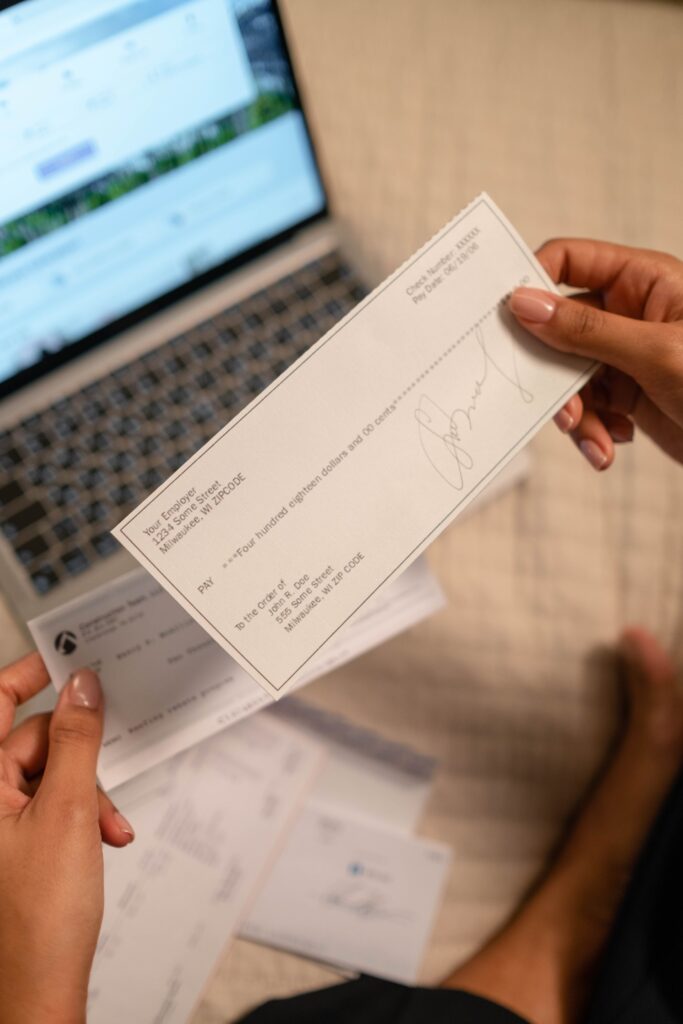
I still remember sitting down with my first “real” paycheck and having absolutely no idea what to do with it. I had a vague sense that I should “save some” and “not spend it all,” but no actual plan. So I did what a lot of people do the first time: I built the strictest, most detailed budget I could, tracking every category down to the last cent in an Excel spreadsheet.
It felt responsible. It lasted about a month.
By the end of that first month, I’d run out of money before payday — even though, on paper, my numbers should have worked. The problem wasn’t a big purchase I’d forgotten to account for. It was a coffee here, a couple of beers there — the kind of spending that felt too small to bother tracking, until it quietly ate through the buffer I thought I had.
If you just graduated and got your first paycheck, this guide is for you. No jargon, no assumption that you already know how money works — just a simple system to get your budget under control from day one.
Why Your First Budget Feels So Hard
Before your first job, your relationship with money was probably simple: you had some, you spent it, it ran out. Now you have a recurring paycheck, recurring bills, and — for the first time — the responsibility of making sure the math works every single month.
The good news: you don’t need a complicated spreadsheet or finance background to get this right. You need one framework and one habit.
The Framework: The 50/30/20 Rule
The 50/30/20 rule is one of the simplest ways to structure a first budget, and it’s a good starting point precisely because it doesn’t require tracking every single expense category separately. You split your after-tax income into three buckets: 50% for Needs (rent, utilities, groceries, insurance, minimum debt payments, transportation), 30% for Wants (eating out, entertainment, subscriptions, shopping, that daily coffee), and 20% for Savings and debt payoff (emergency fund, retirement contributions, extra debt payments).
For example, if your take-home pay is $3,000 a month, that would look like $1,500 for needs, $900 for wants, and $600 for savings and debt.
This isn’t a strict law — some cities or salary levels make 50% for needs unrealistic, and that’s fine. The value of the framework is that it gives you three clear categories to check yourself against, instead of guessing.
The Mistake Almost Everyone Makes: Ignoring the Small Stuff
Here’s what I didn’t understand the first time I tried to budget: the expenses that hurt aren’t the big, obvious ones. A big purchase is easy to notice and easy to plan for. It’s the small, repeated ones that quietly wreck a budget.
Picture a normal day: a coffee in the morning, a couple of beers after work. On their own, those feel harmless — maybe $10 total. But $10 a day, five days a week, adds up to roughly $200 a month. Over a year, that’s around $2,400 — money that never shows up as “one big expense” you’d notice, but that can be the entire difference between hitting your savings goal and falling short of it.
This doesn’t mean you have to cut out coffee or going out with friends. It means these small, recurring purchases deserve a place in your budget — usually inside your “wants” category — instead of happening invisibly, off the books.